

Christmas Eve is tomorrow! It’s finally here. We’ve made it. There is always such great anticipation for Christmas every year. We experience it both inside and outside of the church too. The day after Thanksgiving all of the stores start their Christmas sales. All of the decorations go up, if they haven’t already been up since Halloween…my sister, Sallie, texts a picture of her tree to the family every year on Nov. 1. And we begin the long wait. The liturgical calendar of the church highlights the wait as well with the month of Advent…four weeks of anticipation. Our passages and songs and sermons all look forward, waiting in hope for the arrival of Christmas Day. As the song goes it’s the most wonderful time of year. And at the same time it is incredibly torturous. So much build up for one day, and then it’s all over. There is not another day like it on the calendar. Easter, the 4th of July, our birthdays, our anniversaries, none of them compare to Christmas. I don’t know about you, but I don’t listen to only patriotic music for the month preceding the 4th of July. Easter doesn’t have a chance thanks to Lent. We prepare for that amazing holiday by being downright somber for a month. But with Christmas, we throw parties, we stream Christmas music exclusively and make sure Mariah Carey gets paid, we watch Christmas movies, we decorate our whole house, and spend ridiculous amounts of money all to celebrate this one day.
It’s no surprise that there is quite a let down after it’s over. We enjoy our gifts and have the fun of New Year’s a week later, but the rest of the winter simply doesn’t simply can’t live up to all of the excitement of Christmas time. Winter hits it’s high note right at the beginning and then it often feels like we fall into the long dark slog of gray cold days…at least for those of us in the north.
Don’t get me wrong, I think Christmas is worth it. All of the commercialism aside, Christmas is a magical time of year, and it should be. It marks one of the most dramatic events in all of history, the moment God himself broke into his creation… the moment He entered into our situation as human beings, our brokenness, our pain, our need. When “God was one of us” – to quote Joan Osborne. And it wasn’t just some sort of divine experiment where He was just curious about what it was like to be a human. Do you remember the movie Meet Joe Black when Brad Pitt plays the character, Death, and enters into a human body and screws with Anthony Hopkins’ life, including falling in love with his daughter? Who knew Death was a romantic???

That’s often the way we think of divine beings engaging with our world. It is more like aliens from another planet visiting earth with tons of potential for comical misunderstandings and so on. That’s not what happened here. That’s not the God of the Bible. While He is completely other from us, He knows us intimately. He is the Creator and Sustainer of all things. He is not distant and far off, but intimately involved in all of existence. It is true that we find solace in the fact that Jesus became human and learned of our plight first hand, that, to quote the author of Hebrews, “he was tempted as we are.” That’s the point of Joan Osborne’s song I mentioned a second ago. She is asking the question how would we relate to God? We want a relatable God, not one that is so far off from us. The Bible presents us with a God that came because He knew our situation. He knew our sin had cut us off from Him, from life. He came with a purpose. It was not an experiment; it was a rescue mission.
The lectionary passage from Isaiah 9:1-7 tells us God’s focus in Christmas. In this prophecy we hear God’s rescue plan, and we see that He was very aware of our brokenness and need long before he came, in fact it was his motivation. Isaiah tells us he came to rescue us from three related things: darkness, demand, and death.
No More Darkness
First, darkness. Jesus came to bring an end to the darkness. Darkness is such a powerful descriptor. It is an all-encompassing thing, and Isaiah presents it here as such. In verse 2, he describes us as walking in the darkness, which is a difficult thing to do when you take it quite literally. Walking in the dark often leads to stubbed toes and bruised shins, if not something more drastic like an unexpected trip headfirst down the stairs. But here it also has the sense of status with it. We are in a state of walking in darkness—our minds, our hearts, our souls are in darkness. We cannot see or understand clearly or correctly, we cannot see period. So, it is a commentary on us as individuals and as a human race. We are in darkness. Isaiah doesn’t stop there. He goes on to describe us as those who dwelt in a land of deep darkness. It continues the previous idea, but now broadens it to the world around us, the land is in deep darkness. It’s not just us as humans, but the whole created order has fallen into darkness and is suffering. As I said, darkness is all-encompassing.
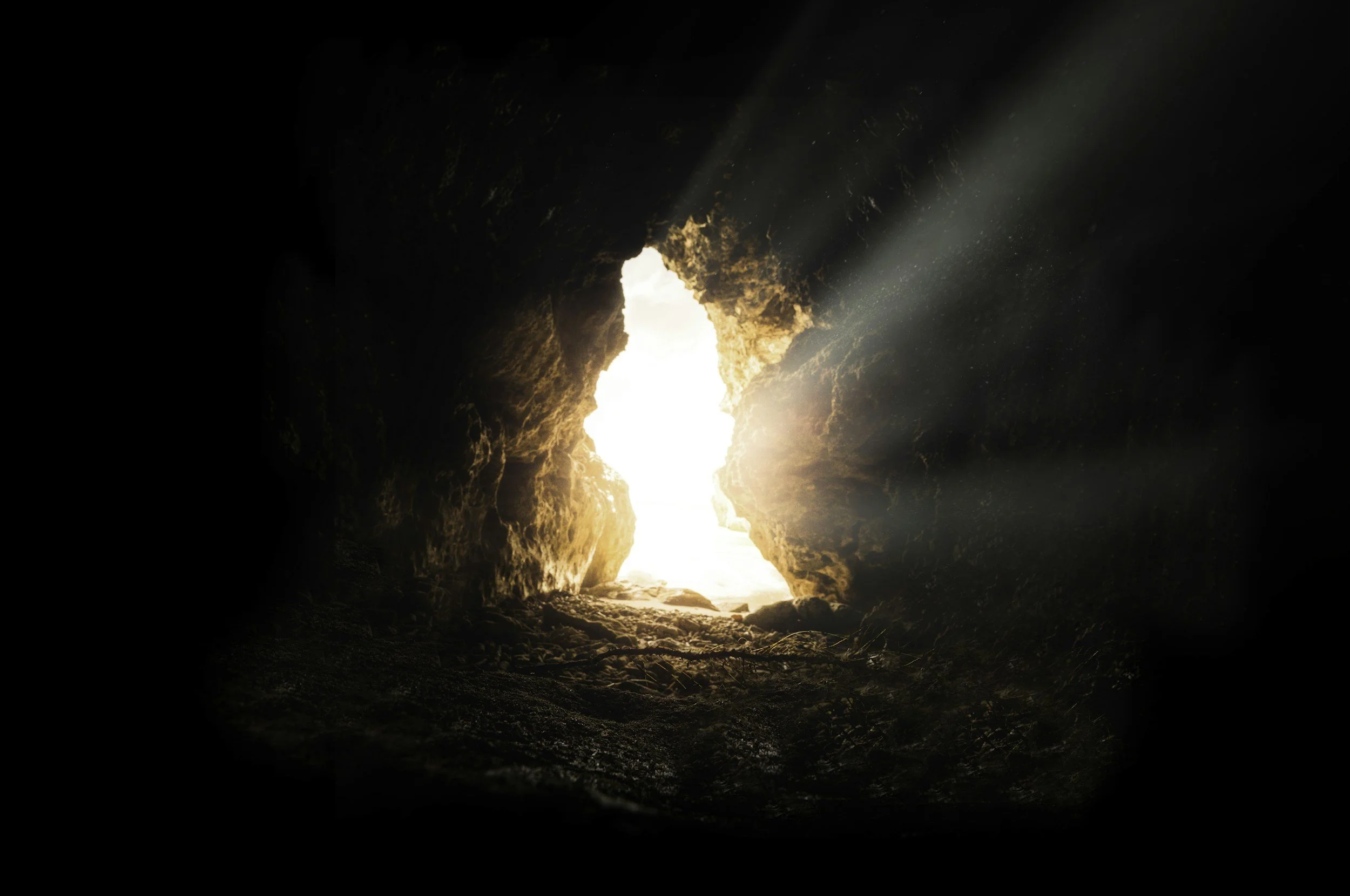
I went spelunking once when I was younger with a group from my summer camp. The counselors led us down further and further into a very cool cave. We had to squeeze through very tight spaces that would make anyone claustrophobic. Then when we reached a larger room in the cave our counselors told us all to sit and turn off our flashlights. It was the only time in my life that I have experienced the complete absence of light. There was absolutely no light, only darkness. I put my hand in front of my face and I could not see it. There was no light for my eyes to pick up. Complete blackness. It almost felt like a substance. I felt surrounded, crowded by it, like it closed in on me. It was terrifying. We all screamed and the counselors turned their lights back on. That’s the image that comes to mind when I read this diagnosis from Isaiah, we and our whole world in total almost tangible darkness. I wonder if you can relate or have ever related to that feeling of being in darkness, unable to see where you are or where you are going.
Isaiah tells us that it is in that context which we have seen a great light, and on us a light has shone. The darkness is broken by light. I love the metaphor because no matter how dark it is, just like in that cave, the darkness cannot overcome the light. The two cannot exist in the same space. Where light is, there is no more darkness. When the counselors turned their flashlights back on all of a sudden my world expanded. In the pitch-blackness, even though I heard others next to me, it was as if I was trapped in myself. There was nothing outside of me. I felt completely alone, but with a flash of light it ended. I was in a large room with lots of people. I felt like I could breathe again. I had space all of sudden when before I felt squeezed. This is the effect of Jesus coming into our world. He came to bring light. He is the light and the darkness has not overcome it (John 1:5).
He breaks in and changes everything. Verse 3 describes a completely new situation. Light brings life – multiplied the nation, increased its joy, joy at the harvest, dividing the spoil – a picture of new life, a life more abundant. That is the effect that light has on us and our world. It brings new life. So Jesus coming means no more darkness.
No More Demand
Second, demand. Jesus came to bring an end to the demand. Another picture for our situation is one of slavery. We are slaves to sin. The Reformers in the 16th century referred to it as the bondage of the will. Our wills are bound as a result of sin. We are no longer free, but are now prisoners. We want to be free, we like to think of ourselves as free, but we are not. We have become masters at convincing ourselves otherwise especially here in the United States. Most of the time you would think that we invented the concept of freedom as a country. And praise God most of us do not have to experience what slavery feels like, but there are millions around the world, including in our country that do know what it feels like. There are families that still feel the legacy of slavery in their history, whose ancestors were brought here against their will and forced to work for others, bought and sold as property. And there are those who are enslaved right now in the sex trade, working in massage parlors or on the streets, trapped in a life of abuse. Slavery is very real.
Most of us can relate to slavery and the bondage of the will when we think about our motivations and our thought life. We try to do the right thing and love others and so on, but if we’re honest with ourselves we know that most of the time we help others out of a sense of guilt and a desire to make us feel better about ourselves. We do it so that we come off as good people. Or we are just cruel in our thoughts to others and ourselves. We fantasize about others getting theirs or we are burdened by the voices of shame in our minds telling us that we are worthless. We are not free in our minds and hearts. We are bound, bound in sin.
And all of this relates back to a demand. A demand for righteousness, for perfection. It relates back to the law, God’s holy law. We know our sin and we feel our sin because of the demand on us to be something that we are not, the demand on us to be perfect (Matt. 5:48). The law exposes and condemns our sin, and we are crushed by it. Paul says it numerous times and in numerous ways throughout the New Testament, but none more clearly than in 1 Corinthains 15:56, “the power of sin is the law.” Our sin and the law are intricately linked. As long as the demand is on us we will feel the weight of our sin.
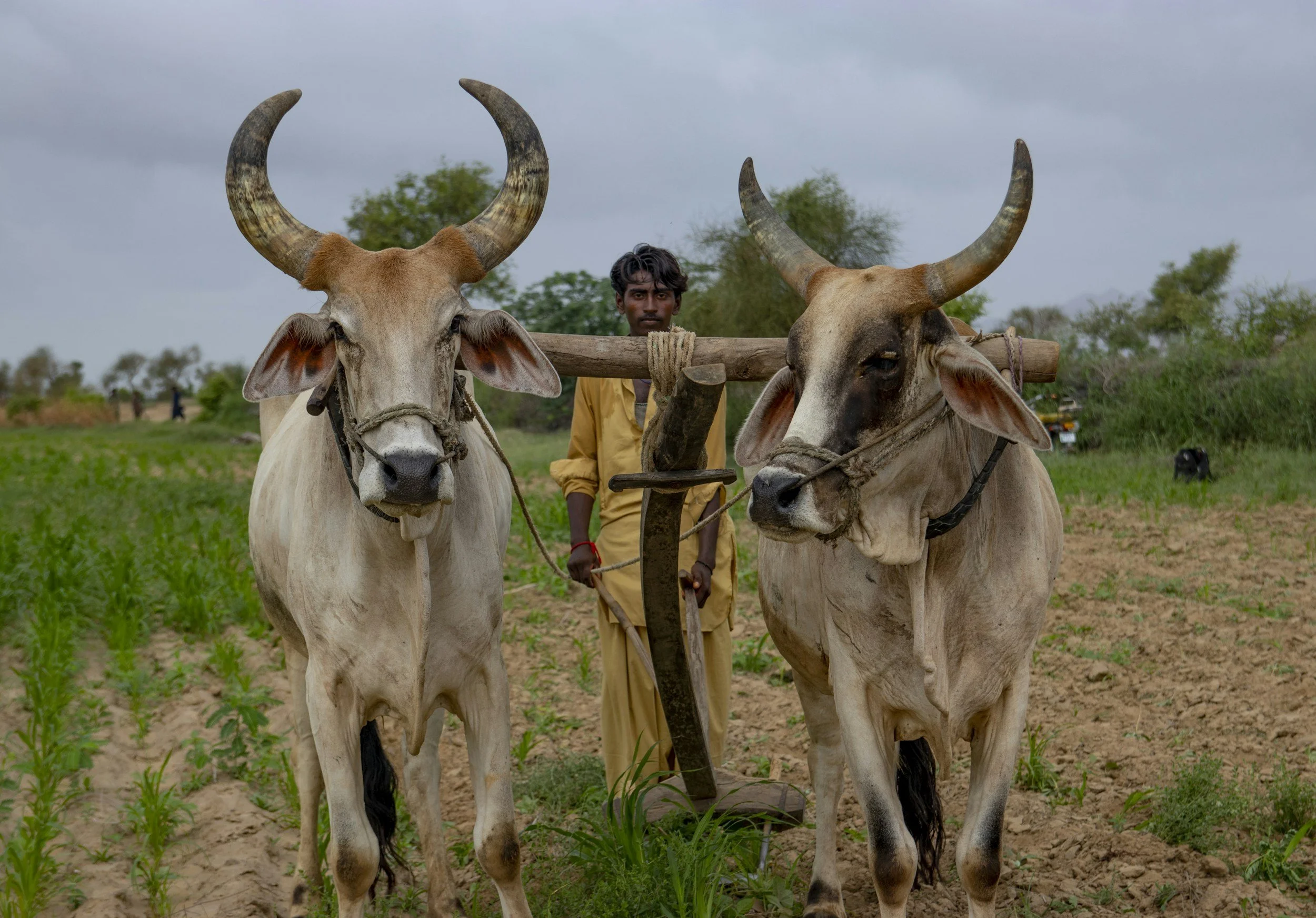
Listen to what Isaiah says in verse 4, “For the yoke of his burden, and the staff for his shoulder, the rod of his oppressor, you have broken.” All of these are tools of enslavement. Yokes are used to control animals and prisoners. You are yanked whichever way the yoke goes. A staff and a rod were used for discipline, for judgment. You are beaten with them when you get out of line or break the rules. These images encompass everything we have talked about. Those who are suffering under literal physical slavery right now can hear this passage and know that God is promising that their bondage has been broken. Jesus came into our world to break it, to break the yoke, the rod and the staff. And on an even deeper level he came to break the yoke of our sin and the rod and staff of the law. He has come to remove the demand. Without the law our sin has no power over us. As Paul says in Romans 7, “For apart from the law, sin lies dead.” Jesus came to fulfill the law on our behalf, to be the righteous one for us, to set us free. He obeyed the law for us so that it can no longer accuse us and demand anything of us, remember “he was tempted in every way,” and he paid the penalty for our sin under the law as well, which brings an end to the whole system of demand. There is no law to accuse, and there is no sin to condemn all because of Jesus’ life, death and resurrection. As Paul declares, “Sin will have no dominion over you, since you are not under the law, but under grace” (Rom. 6:14). Jesus coming means no more demand.
No More Death
So no more darkness, no more demand, and finally no more death. Jesus came to bring an end to death. If the other two are true then this is the logical result. Without darkness (our sin) and without demand (the law) there can be no death. As Paul says, “The wages of sin is death” (Rom. 6:23). Jesus dealt with our sin and finished death for good. Isaiah puts it this way in verse 5, “For every boot of the tramping warrior in battle tumult and every garment rolled in blood will be burned as fuel for the fire.” He uses images of war to show death, the tramping warrior and blood soaked garments, all of these will be burned as fuel for the fire. They will be burned up. They will no longer exist. Again, this is both in the literal sense that actual war will cease, and also our own spiritual and mental war against sin and death. It will all be swallowed up by him. He will bring peace. Isaiah refers to Jesus as the Prince of Peace in verse 6. Jesus coming means no more death. It will be gone…there will only be life and life everlasting.

No more darkness, no more demand, and no more death. This is his purpose for coming into our world. This is why Christmas happened. Isaiah gives the reason for all of these amazing promises: “For to us a child is born, to us a son is given; and the government shall be upon his shoulder, and his name shall be called Wonderful Counselor, Mighty God, Everlasting Father, Prince of Peace. Of the increase of his government and of peace there will be no end, on the throne of David and over his kingdom, to establish it and to uphold it with justice and with righteousness from this time forth and forevermore. The zeal of the Lord of hosts will do this” (v. 6-7).
There is the final purpose and promise from God in Christmas that His reign of righteousness and peace will be forever, and He will do it. It will have no end, and it all depends on him. He came to bring an end to all of our enemies, the things that destroy us: darkness, demand, and death, and what he gives us in place of those things is peace, justice, and life. And we know it’s true because we have the privilege of living on this side of the first Christmas. We know that Isaiah was right: God came and accomplished his rescue mission. It is unlike our experience of Christmas right now that we talked about at the beginning where there is a huge build up and then a pretty big let down because the season ends. Isaiah tells us that Jesus’ kingdom will never end! It almost doesn’t compute. We’re not used to this. We simply don’t believe that something so good could last forever. We even have a cliché that expresses this – “all good things come to end.” Well, Isaiah tells us different. Jesus ushers in a new era where all bad things come to an end in him. No more darkness, no more demand, no more death. In place of them we have eternal freedom, eternal freedom in Jesus Christ is the promise to you on Christmas Day. Our new hope that all good things will never end in him. Amen.

Recommended Reading