

A Good Friend of the Zero

A 1970 Buick Estate from an Ebay listing
I want to begin with the 2013 movie, The Way, Way Back. It wasn’t a huge box office smash, so my guess is that most of you have not seen it, but I loved it and it has an amazing cast with Steve Carrell, Toni Collette, and Sam Rockwell, so it is your homework this week. The Way, Way Back … it is about an awkward kid named Duncan coping with his broken family and the subsequent loneliness of it all. Duncan’s mom, Pam, played by Toni Collette, is dating a jerky guy named Trent, played by Steve Carrell. It’s obvious that Pam and Trent are getting quite serious and look like they are headed for marriage. So, they have the brilliant idea of going on summer vacation together and bringing Duncan and his sister with them. Trent is taking them all to his condo on the beach in his restored classic 1970 Buick station wagon. One of those big old wagons with the wood paneling and the odd third row seat facing out the rear of the wagon. Everyone is asleep in the car except Trent and Duncan. And Duncan is sitting in that third row seat…the way way back of the wagon. Trent in all of his supreme wisdom thinks he’s gonna try to help this awkward kid and asks Duncan to judge himself. He asks, “How do you see yourself on a scale from 1 to 10?” Talk about a trap! Super uncomfortable for the poor kid. Duncan of course doesn’t want to answer, but Trent pushes him, and Duncan finally says “6, I guess.” To which Trent responds saying, “I think you’re a 3.” Ugh! “I think you’re a three.”
Trent is the voice of the law evaluating you, sizing you up and finding you wanting. “You’re worse than you think are.”
But on that terribly awkward summer vacation Duncan meets Owen. Owen, played by Sam Rockwell, is the care-free manager of the local water park. Owen sees Duncan, gives him a job, hangs out with Duncan, and loves the kid. He wants Duncan to see his value, his worth…the value he sees. Towards the end of the summer, Duncan tells Owen all about Trent and “the three” comment, and Owen knows the type. His dad was like that. At the end of the movie Trent comes in an angry huff to collect Duncan from the water park and Owen stands in his way and simply says to Trent, “I’m a good friend of the three.”
“I’m a good friend of the three.” This is what Jesus’ baptism is. It is Jesus standing between us and our accusers in the law, Satan, and our own sin…that condemning voice in your heart and in your mind that just loves to point out your shortcomings and your failures. That’s Satan’s main tactic you know…to keep you in bondage under the law. That’s what he wants. He knows the law better than any of us and loves nothing more than to keep you on the eternal hamster wheel of trying to justify yourself through it…because in the end he knows it’s gonna kill you. It’s been the same story since the Garden of Eden … like Fleetwood Mac, he “tells [you] lies, tells [you] sweet little lies,” tempts you to break the law, and then beats you up and shames you for failing at it again. “You think you’re a 6? You’ve got to be kidding me!” And we’re even worse than Trent’s assessment of Duncan. Against the standard of perfection that is the law…we’re zeros. We are not righteous. BUT Jesus stands in the way. He stands between us and our accusers and says, “I’m a good friend of the zero…..I’m with the zero.”

Jesus doesn’t wear the big hat, but he does stand in the way
That’s Jesus’ baptism. It marks the beginning of Jesus’ earthly ministry because it is his physical declaration of solidarity with us. John the Baptist was right in Matthew’s gospel when he questioned Jesus’ desire for John to baptize him…Jesus did not need to be baptized. He was without sin. He was perfect. He is God. He didn’t need to repent. But his baptism was actually not really about him…it was about us…it was for us. This was the moment when Jesus stepped into our place saying, “I’m with the zero.” It is the beginning of what is known as “the great exchange” when Jesus took our sin upon himself and then gave us his righteousness instead. Jesus is saying, “I am the second Adam. I have come to undo what Adam and Eve did. I have come to stand in their place.” He is the 10 for us. He puts himself under the law in his baptism. As Paul says in Galatians 3 and then again in Romans 3 and 7: the law was given because of sin…to show sin for what it really is…not to fix it, but to expose it…to push us to repentance. Jesus stands in the way and says to the law and Satan, “If you want to accuse anyone accuse me.”
There are some very unique details in John’s gospel account of the beginning of Jesus’ ministry, and I want to highlight three of them to draw out the depth of what Jesus has done for us, to draw out the depth of what it means for him to say, “I’m a good friend of the zero.”
John doesn’t actually recount Jesus’ baptism directly, but rather gives an account of it through the testimony of John the Baptist. Having written his gospel last after the other gospel writers, John would have known the other three included it, which freed him up to highlight the theological implications of Jesus’ baptism for us. One of John’s main concerns is to drive home Jesus’ divinity…that Jesus is the one and only Son of God. Which we hear in John the Baptist’s testimony in verses 33 and 34: “he who sent me to baptize with water”…he means God the Father who called him to his ministry…so he’s saying, “[God himself] said to me, ‘He on whom you see the Spirit descend and remain, this is he who baptizes with the Holy Spirit.’ And I have seen and have borne witness that this is the Son of God.” John wants to us to know Jesus is one with the Holy Spirit and his ministry is by the Spirit.
This builds on John’s famous opening where he takes us back to creation and reveals to us that Jesus is the Word of God through whom all things were made. “The Word was with God, and the Word was God” (1:1). But John is not interested in simply telling you that Jesus is God…he wants you to hear why that matters to our particular situation. John wants you to know that Jesus has come to recreate everything. He has come to make all things new…and because he is the original creator God he actually has the power to do it! This is the first unique detail in John’s gospel: he breaks down the beginning of Jesus’ ministry into 7 days to tie it to Genesis 1 and 2. We’re gonna walk through each of them. It’s important to note that most scholars agree that it is not necessary that these days were an exact chronological succession one day following directly after another…this happened on Tuesday, then this happened on Wednesday. What is important is that John is saying these events did happen in this order and he puts them in succeeding days to show Jesus’ work is the work of new creation. In this way it actually mirrors the Genesis creation account quite closely as Moses wrote it in poetic form capturing the succession of God’s work over many ages in 6 days.
Here in John, the first day of recreation is Jesus’ baptism. As we’ve said John doesn’t explicitly recount the baptism, but rather does implicitly when the Pharisees question John the Baptist in verses 19-28. John the Baptist says to them, “I baptize with water, but among you stands one you do not know, 27 even he who comes after me, the strap of whose sandal I am not worthy to untie.” And John gives us the context, “These things took place in Bethany across the Jordan, where John was baptizing.” Day 1.
Then verse 29 says “the next day” when John the Baptist testifies to who Jesus is and that he saw the Spirit descend on him at his baptism. Day 2. Then verse 35 says “the next day” when John the Baptist testifies to his disciples including Andrew, and Andrew gets his brother Simon and they start following Jesus. Day 3. And again, in verse 43 says “the next day” Jesus calls Philip and Nathaniel. Day 4. Finally, 2:1 says, on the third day, which brings us to the 7th day where Jesus performs his first miracle at a wedding in Cana where he turns the water into the best wine. We’ll come back to that 7th day at the end, but John wants you to see Jesus’ mission here, the first detail of why it matters that he is God, is to bring a new beginning for us…to recreate us.
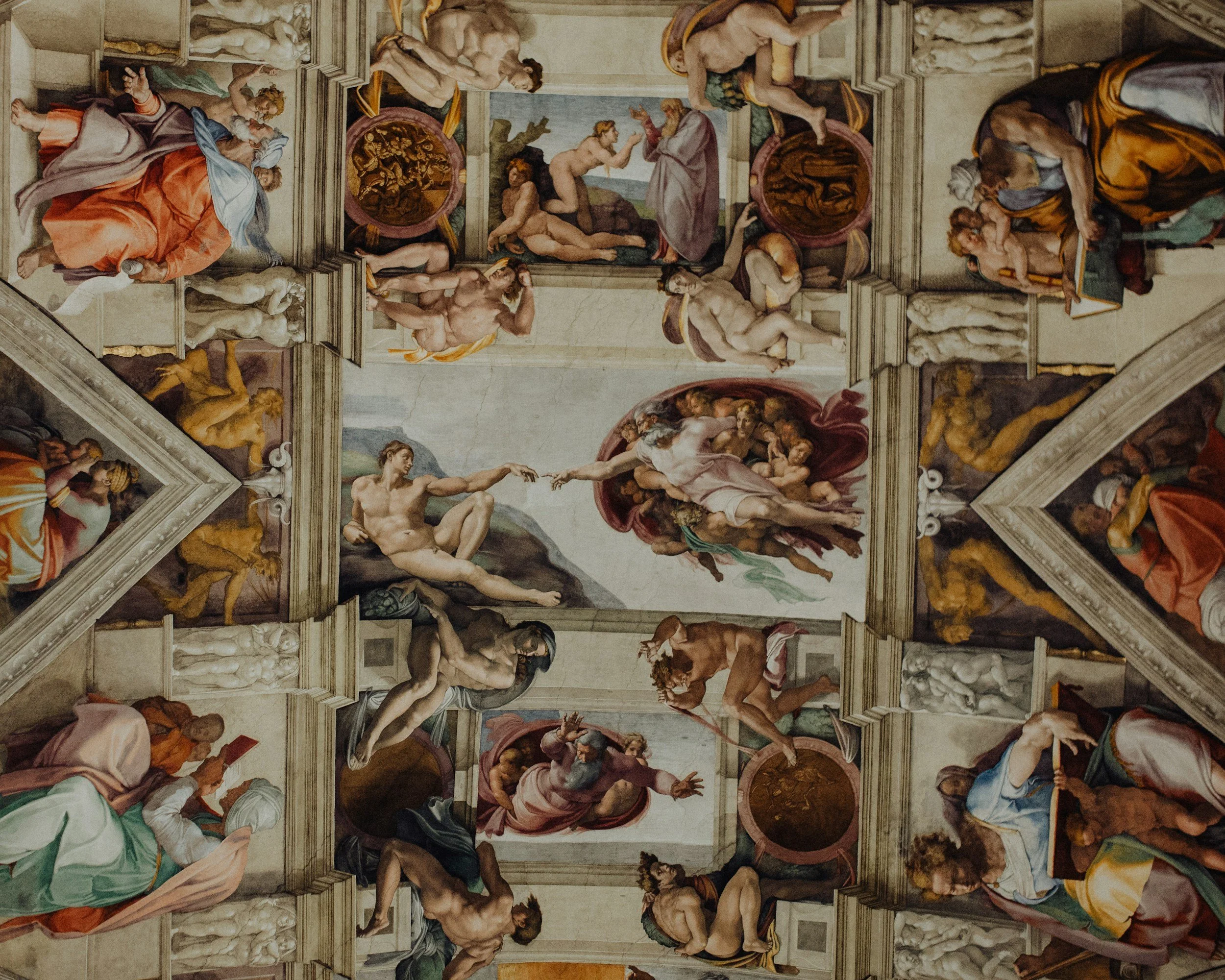
The second and third detail unique to John that I want to highlight are both found in John the Baptist’s proclamation of Jesus and again they have to do with Jesus’ mission, why he came. It is his title of being “the Lamb of God.” None of the other gospel writers use this title, but John uses it twice here and then multiple times in the book of Revelation. In verse 29 John the Baptist says, “Behold the Lamb of God, who takes away the sin of the world!” The Lamb of God title is drawing heavily on Old Testament imagery. First, is the scapegoat. Jesus is our scapegoat. We tend to think of scapegoating as a negative thing in our culture today. It’s often a tactic associated with bullies and narcissists where they try to blame someone else for their wrongdoings and/or shortcomings. But the idea of the scapegoat comes directly from God in Leviticus 16, and is one of the most beautiful things ever for broken people like me.
In Leviticus, God gave instructions for Aaron to “lay both his hands on the head of a goat, and confess over it all the iniquities of the people of Israel, and all their transgressions, all their sins. And he shall put them on the head of the goat and send it away into the wilderness….The goat shall bear all their iniquities on itself to a remote area, and he shall let the goat go free in the wilderness” (v. 21-22). It is a dramatic picture of God separating our sin from us…as far as the east is to the west. Isaiah echoes this three times in arguably his most famous chapter, chapter 53 – “the Lord has laid on him the iniquity of us all… and again: by his knowledge shall the righteous one, my servant, make many to be accounted righteous, and he shall bear their iniquities…and again: he bore the sin of many.” And Paul reveals that this very intentional scapegoating by God goes even one step further when he wrote in 2 Corinthians 5, “For our sake he made him to be sin who knew no sin, so that in him we might become the righteousness of God” (v. 21). This is how dramatic that great exchange is…Jesus as the Lamb of God takes away our sin by actually becoming sin itself. “I’m a good friend of the three.” “I’m a good friend of the zero.” “If you want to accuse someone accuse me.”
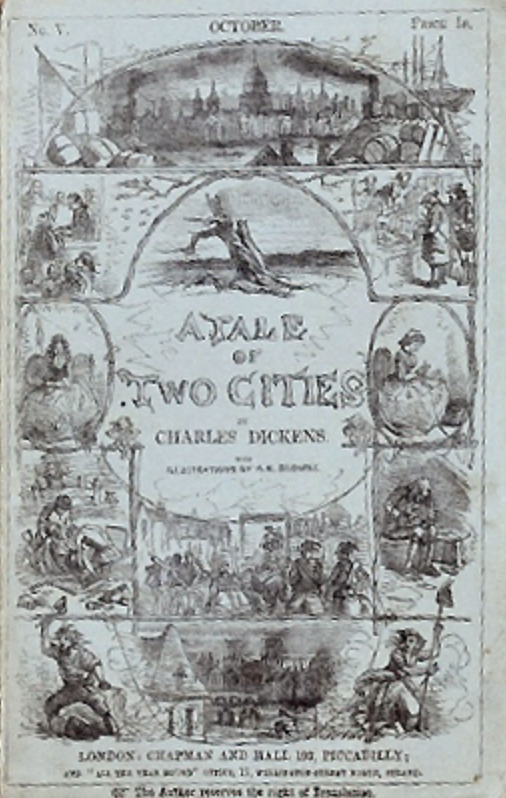
Charles Dickens understood the gravity of this when he wrote A Tale of Two Cities. In one of the most beautiful moments in all of literature, he has the cynical English lawyer in Sydney Carton take the place of the French aristocrat Charles Darnay out of love for Lucie Manette. During the height of the Reign of Terror, Carton becomes Darnay’s scapegoat and sacrifices himself by going to the guillotine so that Darnay could go free and return to Lucie. Add that to your homework…watch The Way Way Back and read A Tale of Two Cities.
For our third and last detail unique to John’s account of the beginning of Jesus’ ministry, in the presence of two of his disciples John the Baptist proclaims again, “Behold, the Lamb of God” when he sees Jesus. The repetition of this unique title for Jesus reminds us that there is even more meaning behind it in addition to the scapegoat. Jesus as the Lamb of God is the Passover Lamb from the Exodus. Perhaps the most famous story in all of the Old Testament is when God told Moses that he was going to bring a final plague upon Egypt in order to free the Israelites from their slavery…death to all the firstborn in the land. He instructs Moses to have all the Israelites sacrifice a lamb without blemish and wipe it’s blood on the door posts and lintels of their houses so that when the angel of the Lord came in judgment upon Egypt that night he would see the blood of the lamb and would pass over that house sparing all inside.
Jesus’ baptism at the very beginning of his public ministry is pregnant with this coming reality that he would shed his blood to save us. Jesus not only takes our sin upon himself, he not only becomes sin for us, but he also pays the price for our sin. Remember he put himself under the law for us at his baptism and stood in our place saying he would take the consequences of our sin so that we wouldn’t have to. Scripture is very clear that the wages of sin is death. This is the ultimate cost of our rebellion, of our broken inability to love the way that we should. As we said at the beginning, this is the goal of our enemy…total destruction…death. And Jesus, as the Lamb of God, says, “I’m with the zero. I am their sin, and I will pay the price for it.” And he, like the scapegoat, goes out of the city gates bearing our sin to be sacrificed as our Passover Lamb on a cross on Calvary.
He stands between us and our accusers and silences them forever because they have nothing more they can say. He has answered them definitively and brought them to an end. The law demands justice against our sin, the enemy lays claim to us because of our sin, but when Jesus became our sin and then died on the cross for our sin the demand for justice was satisfied and any claim of the enemy was erased. The judgment passes over us because we are covered in the blood of the Lamb. Like Sydney Carton under the guillotine, Jesus took it all, so that we might go free. He became a curse for us, so that we might receive the blessing of God. This is exactly what our baptism means for us…it unites us to Jesus Christ in his baptism. As Paul says in Romans 6, “Do you not know that all of us who have been baptized into Christ Jesus were baptized into his death? We were buried therefore with him by baptism into death, in order that, just as Christ was raised from the dead by the glory of the Father, we too might walk in newness of life. For if we have been united with him in a death like his, we shall certainly be united with him in a resurrection like his” (v. 3-5).
What this means on a day to day basis is that whenever you hear those accusing voices…from within and from without…whenever the Trent’s in your life come calling and start sizing you up…pointing out your failures trying to get you to jump back on that hamster wheel of self-justification under the law…telling you you’re a three, or that you’re a zero…know that Jesus Christ stands between you and them. He says, “I’m a good friend of the three. I’m a good friend of the zero. If you want to accuse anybody accuse me.” You can tell those accusing voices to take it up with Jesus. If you’ve got a problem with me, take it up with Jesus because he is the 10 for me, he stands for me.
And as I promised, it brings us back to that 7th day of recreation, John 2:1. When everything is finished. Your sin is gone, put to death in his body on the cross; the law is fulfilled in him – you are no longer under the law, but are now under grace; and the enemy is silenced with no claim on you. It’s no mistake that John said, on the third day Jesus was at a wedding in Cana. It’s pointing us ahead to THE third day when he walked out of that grave. He conquered death itself for you and me. John is telling us the end right here at the beginning. Jesus makes all things new and there is nothing left to do, but to enter his rest and celebrate at the marriage supper of the Lamb, the great wedding banquet of eternity. You are free. Jesus is with you. Jesus is for you. Jesus is a good friend of you. And he makes sure the wine never runs out and the party never stops.

Recommended Reading